
What Years in Child Protection Taught Me About Domestic Abuse
Why Women Are Still Being Blamed
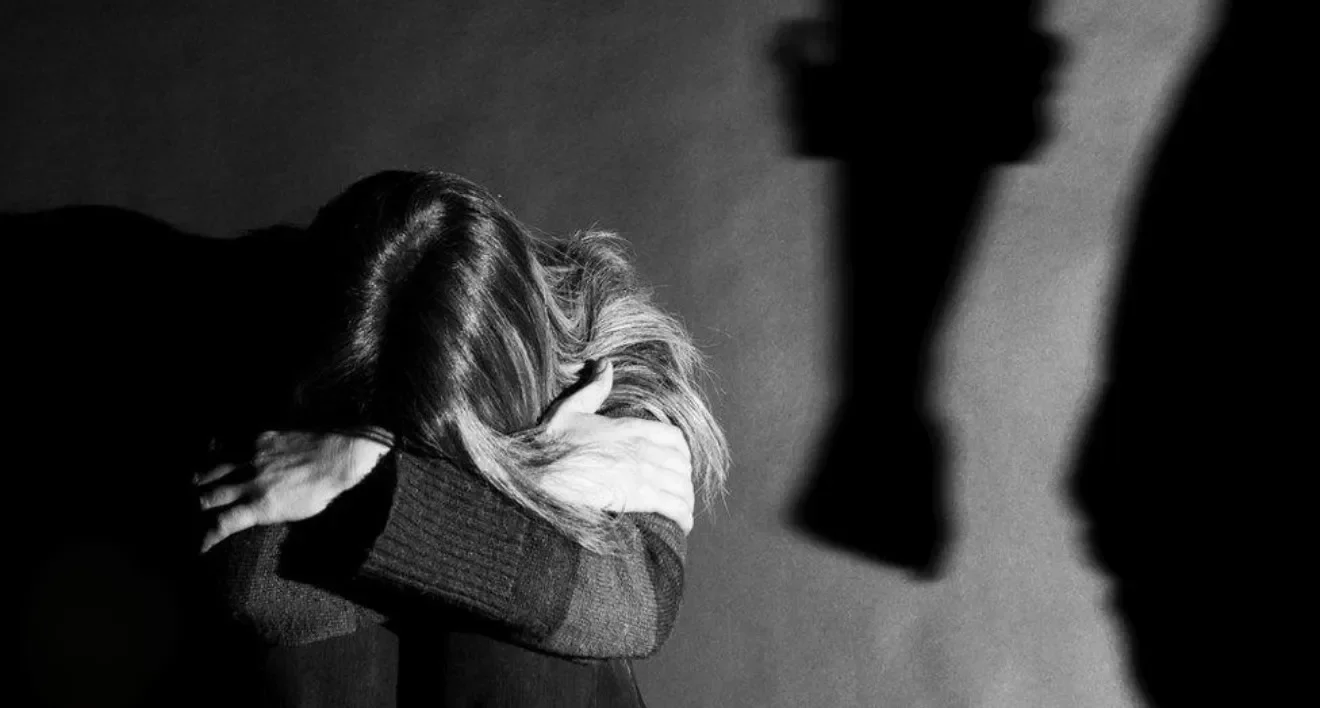
A National Emergency
More and more, we are hearing politicians talk about violence against women and girls in the UK. It is appearing in speeches, headlines, and strategy documents with a new sense of urgency. That, in itself, is not a bad thing. Violence against women and girls should be discussed publicly and taken seriously. However, attention alone does not guarantee understanding.
I have worked in child protection for almost a decade now, and one thing that has become increasingly clear is that our understanding of domestic abuse is not static. Some elements of what we recognise as abuse shift as relationships, technology, and social norms change.
There was a time when it was entirely normal for married women to have no access to their own finances. Money was controlled by their husbands, and this was seen as responsible household management rather than abuse. Today, a man refusing a partner access to money for food, rent, or children’s school uniforms would rightly raise concerns about financial control. The behaviour may look similar, but the understanding has changed.
The same is true in more subtle ways. For some couples, sharing phone locations is an agreed expression of safety or convenience. For others, it is a way of monitoring movement, limiting freedom, and enforcing compliance. Context matters. Intent matters. Power matters. Without those, behaviour is easily misread.
This is part of what makes domestic abuse difficult to define neatly. It does not always arrive with obvious markers. It sometimes hides in what looks ordinary. And it requires systems and professionals to constantly update how they interpret risk.
What is striking, then, is that while the understanding of domestic abuse continues to evolve, there is still no clear agreement at the highest levels about where responsibility for it sits. That uncertainty shapes how the problem is framed, who is seen as dangerous, and who is expected to manage the risk.
In the House of Commons in December 2025, the safeguarding minister, Jess Phillips, described violence against women and girls as a “national emergency”. Not a niche issue. Not something to be quietly absorbed by the already overstretched and underfunded services, but one that demanded action across government, the criminal justice system, and the voluntary sector.
Crucially, the strategy did not only focus on responding after harm had occurred. It was made clear that prevention mattered too. That if we are serious about reducing violence, we have to look earlier. At attitudes. At behaviour. At what boys are taught about women, power, and relationships long before any crime is committed.
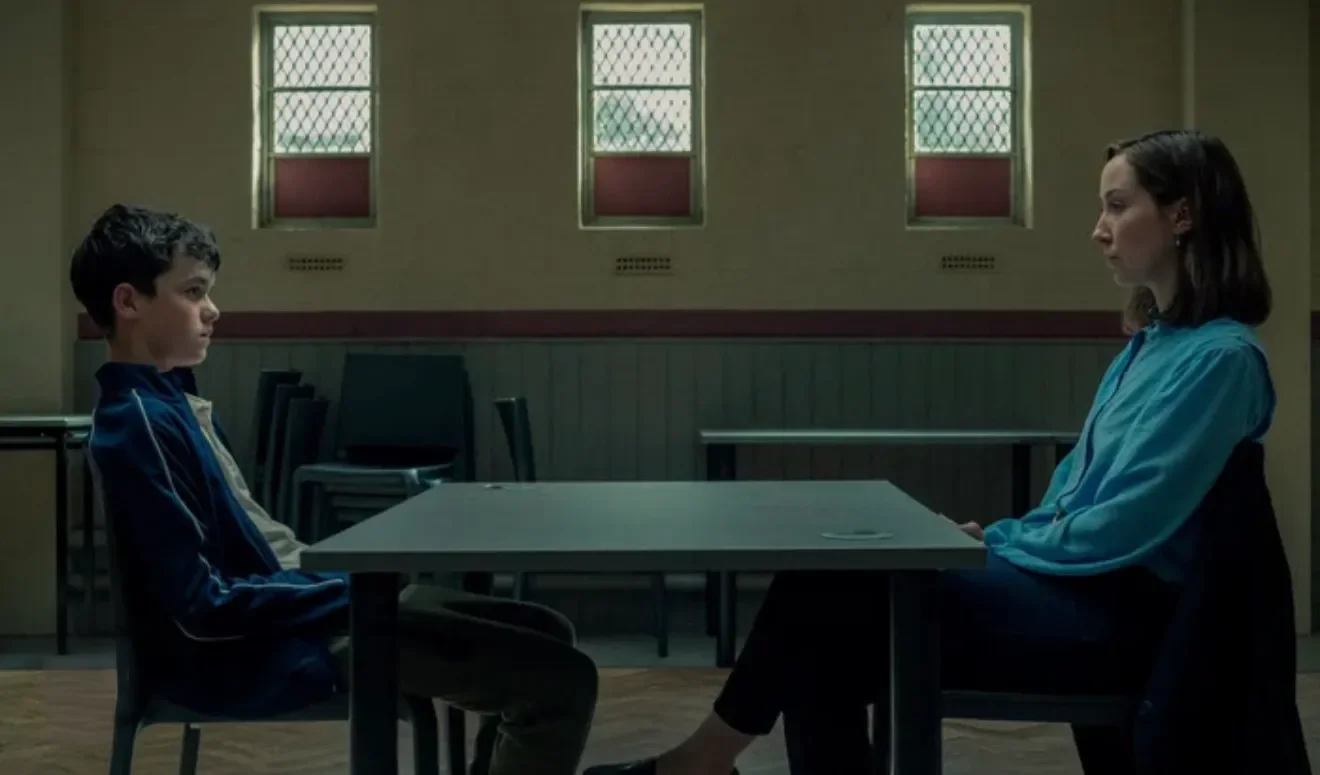
The response was swift. The Conservative leader, Kemi Badenoch dismissed the focus on misogyny in schools, suggesting it was only being introduced because some Labour politicians had watched the Netflix drama Adolescence (side note- this program was sooooo good by the way, definitely go watch it if you haven’t already). She went on to say that the focus should instead be on stopping people “from cultures that don’t respect women” from coming into the country, suggesting that violence against women and girls is not being perpetrated by boys in schools.
What I find troubling here is the way this issue is sometimes framed as though it is new. It is not. Women have been living with domestic abuse, sexual violence, coercive and controlling behaviour for generations. Presenting this as a newly discovered crisis risks rewriting history and overlooking the women who were not believed, not protected, or quietly expected to endure.
It is also concerning how quickly the conversation turns towards immigration. Treating domestic abuse as an immigration problem is a misdiagnosis. Particularly when we know there is no credible evidence to suggest domestic abuse in the UK is primarily driven by immigration. It overwhelmingly occurs within intimate relationships across the population and is most commonly perpetrated by current or former partners.
That matters, because when violence is framed as something external or imported, attention shifts away from where harm most often occurs. It becomes easier to look for danger at the borders than to confront it in homes, schools, and relationships. Easier to imagine perpetrators as other people’s sons than to ask uncomfortable questions about our own.
For the sake of clarity, when referring to domestic abuse, it is not limited to physical violence, but includes sexual abuse, emotional cruelty, coercive and controlling behaviour, financial restriction, isolation, monitoring, and threats. These patterns are usually private, cumulative, and largely invisible to those outside the relationship.
Why Many Women Don’t Recognise Abuse
In my work, I have supported many women who did not initially recognise what they were experiencing as domestic abuse.
Not because they were in denial or intentionally ignoring it (although sometimes this too), but because abuse often doesn’t arrives in obvious forms. It develops slowly. It is normalised. Often, parts of the relationship are genuinely good. Sometimes the partner is the kindest they have ever known, despite the behaviours that sit alongside it.
Abuse does not usually begin with control spelled out clearly. Otherwise, who would stay? Who would go on a second date with someone who announced upfront that they would stop you seeing your friends and family, control what you wear, and occasionally hit you when their football team loses? That is not how it happens.
Instead, the behaviours are introduced gradually, in ways that can be explained away. He is stressed. He had a bad day. He didn’t mean it like that. Then it happens again. Or one day you push him back, or shout, or call him names, and suddenly you feel just as bad as he is. You’re overreacting. You’re no better. You learn to doubt your own responses before you ever question his behaviour.
Years ago, I dropped a woman fleeing domestic abuse and her two toddlers at emergency accommodation. The building was in such a state of disrepair that there were broken windows to the property and appeared to be live wires hanging from the ceiling. Another time, I supported a mother with three children, some with additional needs, into temporary housing. When I opened the door, the smell was overwhelming. There was a dead rat lying in the middle of the hallway.
This may be uncomfortable to read, but there have been moments where I have understood why women return to abusive homes. Leaving is often the point of greatest danger, and when the alternative on offer is pest-infested accommodation or something that looks like a fire hazard, safety becomes a far more complicated calculation.
In some cases, it was the language itself that kept women from recognising abuse. The term “domestic violence” felt too extreme, and wasn’t something that resonated with their experience. There were no broken bones. No visible injuries. The relationship was toxic, yes, but not violent in the way they thought violence was supposed to look.
I want to be clear here that not all harmful relationships look the same. I have worked with couples where harm, control, and cruelty were so entangled that it was genuinely difficult to identify a single perpetrator or victim. These relationships exist, and they can be chaotic, volatile, and resistant to simple labels.
In some of these situations, power can appear to move around. One partner may control the money in ways that leave the other unable to access basic necessities without permission. The other may restrict social contact by monitoring messages, discouraging friendships, or reacting with anger or withdrawal when contact is made. Women, too, can be controlling, coercive, and emotionally abusive, and that reality matters if we are to talk honestly about harm. People are not always honest with professionals, sometimes out of fear, sometimes out of loyalty, and sometimes because naming what is happening feels more dangerous than continuing to live inside it.
But even within these complex dynamics, physical violence complicates how power operates. Where violence is present, differences in physical strength can alter what conflict, resistance, or fear look like in practice. Because these differences are usually gendered, they shape who is more likely to be injured, who adapts their behaviour to avoid harm, and who lives with a greater sense of physical risk, even when other forms of control appear to operate in both directions.
This does not erase other forms of control that may exist on both sides, but it does mean that harm is not always experienced or risked in the same way, even when relationships appear outwardly chaotic or reciprocal.
These dynamics exist and deserve acknowledgement, but they are not the focus of this analysis. What I am talking about is domestic abuse where power moves predominantly in one direction over time. Where one person increasingly sets the terms of daily life.
When Survival Starts to Look Like Failure
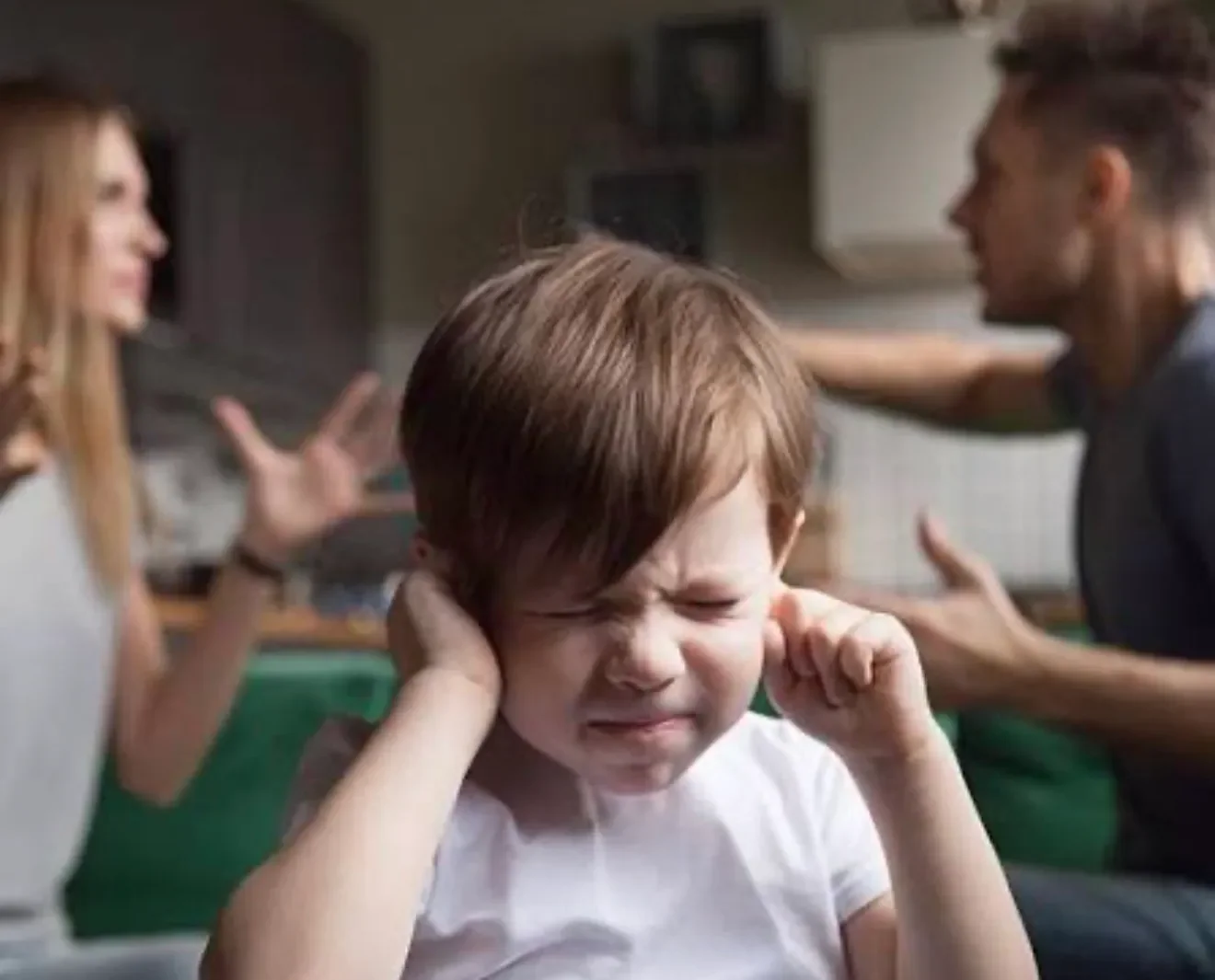
There is a phrase that appears with remarkable confidence in discussions about domestic abuse in the child protection arena: “failing to protect”. It appears in reports and court decisions when children been exposed to domestic abuse within the household.
On the surface, the phrase sounds technical and child focussed. However this is a term mostly used when talking about the mothers, suggesting she should have done more to ensure the children weren’t being exposed to such behaviour.
But in practice, it assumes the abused parent can shield their child from harm while being harmed themselves. Responsibility for safety is placed on the parent experiencing abuse, rather than on the person creating the danger.
Similarly, one pattern I have seen repeatedly is fathers being described as the “better parent” in situations where there has been violence or coercive control. Not because they are doing anything particularly well, but because the mother’s parenting is being judged against standards that ignore what she is responding to.
When a woman is adapting her parenting to manage risk, that adaptation can look like failure from the outside. Missed routines. Unbrushed hair. Inconsistent boundaries. A child who appears unsettled or dysregulated. Meanwhile, the parent who is not absorbing the violence, or who is causing it, can appear or present themselves as calmer, more organised, more insightful to these issues and more in control.
What is being compared, then, is not good parenting versus bad parenting, but visible order versus visible strain. Survival strategies are misread as neglect, and control is mistaken for stability. In that comparison, the parent living under threat can come out worse.
When women live with abusive men, their parenting priorities sometimes narrow. Not because they care less, but because they are constantly managing risk.
If brushing a child’s hair causes distress, and that distress escalates the atmosphere in the home, then hair can wait. The child goes to school with knots that teachers notice. If insisting on bedtime escalates things further, then bedtime becomes flexible. The child arrives tired, unsettled, and short-tempered. If being late provokes punishment, then punctuality becomes survival. The child is rushed out of the door, breakfast half-eaten, coat forgotten.
None of this feels like good parenting to the person doing it. It feels like containment. It is the difference between a raised voice and a broken plate. Between a slammed door and something worse.
From the outside, this can look like neglect. From the inside, it is triage.
This does not mean children are unharmed. Nor does it excuse the conditions they are living in. Living in an atmosphere shaped by fear, volatility, and constant adjustment leaves marks, even when violence is not directed at them. Children absorb tension. They learn to read moods, to anticipate danger, to stay quiet or stay small. The absence of visible injury does not mean the absence of harm.
It is in this context that the idea of “failing to protect” takes hold. The term shifts attention away from the conditions children are living in and towards how those conditions are impacted by a parents action (or perceived inaction). Responsibility settles on the person managing the risk, rather than on the person creating it.
Why ‘Women Do It Too’ Misses the Point
It would be dishonest to suggest that women never use violence, or that men are always the perpetrators. Some women do perpetrate harm, and men can and do experience domestic abuse. There is also a particular stigma attached to male victimhood, which means many men are less likely to report abuse or seek help, and the true number is likely higher than what we see in official figures. I want to be clear that acknowledging gendered patterns of harm does not mean minimising or dismissing male victims’ experiences.
However, to suggest that domestic abuse is an equal issue for men and women would be misleading. The evidence does not support that conclusion. While abuse occurs across all genders, it follows a clear pattern in terms of severity, frequency, and consequence, with women far more likely to experience sustained coercive control, serious injury, and death at the hands of a partner.
When this point is challenged, people often point to the number of women incarcerated for killing their partners. This statistic is frequently raised as evidence that women are just as violent. But it rests on a misunderstanding of what those cases represent.
Women who kill their partners make up a very small proportion of homicide cases in the UK. In contrast, the majority of domestic homicides continue to involve women as the victims rather than the perpetrators. Across England and Wales in recent years, around 70 per cent of domestic homicide victims were female, and in the majority of those cases the suspect was male and a current or former partner.
These cases do not mirror the dominant pattern of domestic violence. They arise from fundamentally different circumstances and power dynamics. Treating them as evidence that domestic abuse is equally perpetrated by men and women strips away that context and collapses profoundly different experiences into a misleading comparison.
Where women do kill abusive partners, the majority of documented cases involve women who have endured long histories of violence, coercive control, and entrapment before the offence, a pattern consistently observed in research on intimate partner homicide. These acts are rarely about aggression in the conventional sense, and more often reflect a moment where fear, survival, and perceived threat collapse into a final fight-or-flight response.
What matters is that these cases are not the same as the broader pattern of male violence against women. They are rarer, different in context, and often emerge from prolonged abuse. Pointing to them as evidence that domestic violence is evenly distributed misses what the data consistently shows about prevalence, severity, and fatality.
Weaponised Statistics
Another claim that often surfaces in these conversations (most commonly and suspiciously raised by men), is that domestic abuse is most prevalent in lesbian relationships. This is usually presented as a settled fact, and as evidence that domestic abuse is therefore not a gendered issue at all.
The claim is typically drawn from prevalence data, most often from large-scale surveys such as the Centers for Disease Control and Prevention National Intimate Partner and Sexual Violence Survey in the United States, and similar studies elsewhere. The problem is not the existence of this data, but how it is interpreted.
These studies measure lifetime experience of abuse, not abuse occurring within same-sex relationships, and they do not consistently distinguish who the perpetrator was. When those details are examined, a significant proportion of the violence reported by lesbian women was perpetrated by men, often earlier in life, including during childhood or in previous heterosexual relationships.
Higher reported prevalence does not mean women are more violent. It reflects cumulative exposure to harm over a lifetime. Collapsing these experiences into a claim about lesbian relationships obscures the source of violence and once again turns complex evidence into a misleading headline.
Abuse occurs in all kinds of relationships, including gay, queer, and trans relationships, and those experiences matter. But acknowledging this does not require pretending that abuse operates in the same way across all contexts.
Queer survivors often face distinct forms of control, including threats of outing, identity-based abuse, and heightened barriers to support. Trans people, in particular, experience disproportionate rates of violence. None of this contradicts the broader evidence that the most severe and lethal forms of domestic abuse are overwhelmingly perpetrated by men in heterosexual relationships. Conflating these realities does not create inclusivity. It creates confusion.
The Myth of the Clean Break
Domestic abuse is often framed, within professional and safeguarding systems, as a relationship issue rather than a behavioural one. When abuse is understood this way, ending the relationship is treated as ending the risk. Support plans are built around separation, and cases are often closed once partners are no longer living together, particularly if a mother states that she will call the police should her former partner turn up.
But violence does not require proximity to persist. Control can continue through threats, monitoring, financial pressure, fear and custody battles. Ending a relationship may change the form of abuse without removing it.
Professional systems struggle with this because they are built around resolution. They want endings. They want agreements, safety plans, and assurances that can be written down and filed away. They are uncomfortable with the idea that some risks cannot be neatly contained.
The Limits of Perpetrator-Focused Work
There are interventions aimed at men who use violence and abuse. They exist. But they are limited, inconsistently funded, and often difficult to access. In many areas, waiting lists stretch for months, sometimes years. By the time a place becomes available, circumstances may have shifted, urgency may have been lost, or motivation to engage may have changed.
When men do attend, engagement varies. Some do not see their behaviour as abusive, or do not recognise themselves in the language used by services. Others understand their relationships as conflict or stress, rather than harm. Without a shared understanding of what the work is for, change is difficult. Turning up does not always mean engaging, in the same way that any support or therapy is unlikely to help if someone does not believe it applies to them.
There are also practical barriers. Many programmes run during working hours, which makes attendance difficult for some. Others attend irregularly or stop going altogether. I have also seen services struggle with group settings. Years ago, I remember one programme closing after it became clear that some of the men attending were using the space to swap tips about how to avoid getting caught in future, rather than to reflect on their behaviour. This is not an argument against working with perpetrators, but a reminder of how difficult and fragile this work can be in practice.
This leaves professionals with a hard question. When work with the person causing harm is unavailable or not working, how is risk managed in the meantime? Over time, this can mean responsibility slowly moves away from the person causing harm and towards those living with its effects, even when no one involved believes that outcome is fair.
If we are serious about reducing domestic abuse, then we have to be honest about what we are asking of the people living inside it. We cannot continue to confuse survival with failure, or mistake visible order for safety. We cannot keep shifting responsibility onto those managing risk while allowing the source of that risk to recede into the background.
Final Thoughts
Domestic abuse is not a problem of individual bad choices, nor one that can be resolved through separation alone. It is a pattern of behaviour, sustained through power, fear, and social tolerance. Until our systems are willing to hold that behaviour at the centre of their responses, rather than the people navigating its consequences, we will continue to misunderstand what protection really looks like, and who we expect to provide it.
And when we misunderstand protection, it is children who carry the consequences. Not because they were uncared for, but because the conditions shaping their lives were misread, minimised, or displaced elsewhere.
References (if you’re so interested)
Office for National Statistics (ONS). Domestic abuse in England and Wales: overview. https://www.ons.gov.uk/peoplepopulationandcommunity/crimeandjustice/bulletins/domesticabuseinenglandandwalesoverview
Office for National Statistics (ONS). Domestic abuse victim characteristics, England and Wales. https://www.ons.gov.uk/peoplepopulationandcommunity/crimeandjustice/articles/domesticabusevictimcharacteristicsenglandandwales
Crown Prosecution Service (CPS). Domestic abuse and coercive control guidance. https://www.cps.gov.uk/legal-guidance/domestic-abuse
Home Office. Domestic Abuse Act 2021: statutory guidance. https://www.gov.uk/government/publications/domestic-abuse-act-2021-statutory-guidance
Dobash, R. E., & Dobash, R. P. Violence Against Wives and related UK homicide studies.
Centre for Women’s Justice. Women criminalised after prolonged domestic abuse. https://www.centreforwomensjustice.org.uk
Walker, L. E. The Battered Woman Syndrome.
Ewing, C. P. Battered women who kill.
British Psychological Society (BPS). Research on women convicted of intimate partner homicide. https://explore.bps.org.uk
Corston, J. The Corston Report (2007). https://www.gov.uk/government/publications/the-corston-report
SafeLives. Research on children living with domestic abuse. https://safelives.org.uk
Women’s Aid. Resources on domestic abuse, children, and post-separation risk. https://www.womensaid.org.uk
Featherstone, B., Morris, K., & White, S. Protecting Children: A Social Model.
Stark, E. Coercive Control: How Men Entrap Women in Personal Life.
Imkaan. Research on domestic abuse and racialised framing. https://www.imkaan.org.uk
Southall Black Sisters. Critiques of culturalised explanations of domestic abuse. https://southallblacksisters.org.uk
Centers for Disease Control and Prevention (CDC). National Intimate Partner and Sexual Violence Survey (NISVS). https://www.cdc.gov/violenceprevention/datasources/nisvs
Walters, M. L., Chen, J., & Breiding, M. J. NISVS: 2010 Findings.
Stonewall. Research on domestic abuse in LGBTQ+ relationships. https://www.stonewall.org.uk
Galop. Research on abuse in LGBTQ+ and trans relationships. https://galop.org.uk
UK Parliament. Hansard: debates on violence against women and girls. https://hansard.parliament.uk
UK Government. Tackling Violence Against Women and Girls Strategy. https://www.gov.uk/government/publications/tackling-violence-against-women-and-girls-strategy